Вход в личный кабинет         RU  EN

Поиск по каталогу печатных изданий

Простой поиск   Расширенный поиск


Автор

Заглавие

Предмет

Найдено печатных изданий: 2

Поискать книги в электронном виде


Bronovickaja A. J., Alma-Ata: a guide to Soviet modernist architecture, 1955-1991 — 2022
2022
Bronovickaja A. J., Alma-Ata: a guide to Soviet modernist architecture, 1955-1991 — 2022
2022
Moscow
Garage
Аннотация: Almaty became the capital of Soviet modernism after it ceased to be Alma-Ata, as its former rivals in terms of architecture—Yerevan and Kyiv, Tashkent and Minsk—gradually lost the heritage of the period dating from the 1960s through the 1980s. The losses in Almaty were not so serious. In 1997, the capital moved to Astana, which took on the architectural representation of independent Kazakhstan. Almaty remained a working museum of Soviet modernism, where one can see the first transparent library in the world, the first postmodernist skyscraper in the USSR, and a dam constructed using the most powerful controlled explosion in history. Authors Anna Bronovitskaya and Nikolay Malinin present the architecture of the city within the broad context of art, culture, and social and political history. This book is the second in a series launched in 2016 with a guidebook to Moscow's Soviet modernist architecture. "From the 1960s through the 1980s, Alma-Ata saw the emergence of a unique blend of international modernism, Soviet colonialism, and attempts by architects to enrich the language of modernism with Kazakh national traditions. Thanks to this book I discovered a completely unfamiliar stratum of postwar Soviet architecture."Алматы стал столицей советского модернизма после того, как перестал быть Алма-Атой, поскольку его бывшие соперники по архитектуре — Ереван и Киев, Ташкент и Минск — постепенно утратили наследие периода с 1960-х по 1980-е годы. Потери в Алматы были не столь серьезными. В 1997 году столица переехала в Астану, которая приобрела архитектурный облик независимого Казахстана. Алматы остался действующим музеем советского модернизма, где можно увидеть первую в мире прозрачную библиотеку, первый постмодернистский небоскреб в СССР и плотину, построенную с использованием самого мощного управляемого взрыва в истории. Авторы Анна Броновицкая и Николай Малинин представляют архитектуру города в широком контексте искусства, культуры, социальной и политической истории. Эта книга - вторая в серии, выпущенной в 2016 году с путеводителем по советской модернистской архитектуре Москвы.
Проверяем наличие...
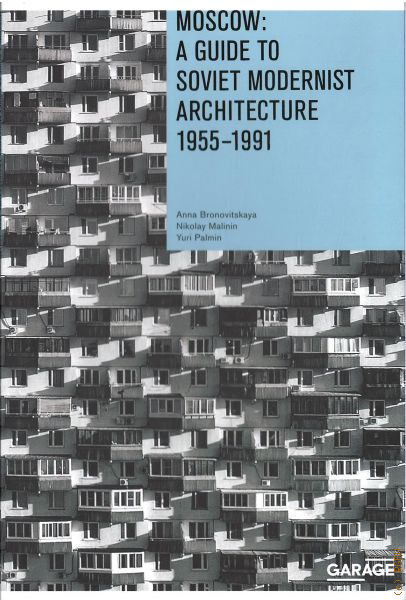
Bronovickaja A. J., Moscow: a guide to Soviet modernist architecture, 1955-1991 — 2019
2019
Bronovickaja A. J., Moscow: a guide to Soviet modernist architecture, 1955-1991 — 2019
2019
Moscow
Garage
Аннотация: Moscow: A Guide to Soviet Modernist Architecture 1955-1991 provides descriptions of almost 100 buildings from the most underrated period of Soviet architecture. This is the first guide to bring together the architecture made during the three decades between Khrushchev and Gorbachev, from the naive modernism of the "thaw" of the late 1950s through postmodernism. Buildings include the Palace of Youth, the Rossiya cinema, the Pioneer Palace, the Ostankino TV Tower, the TASS headquarters, the "golden brains" of the Academy of Sciences and less well-known structures such as the House of New Life and the Lenin Komsomol Automobile Plant Museum. The authors situate Moscow's postwar architecture within the historical and political context of the Soviet Union, while also referencing developments in international architecture of the period.Москва: Путеводитель по советской модернистской архитектуре 1955-1991 годов содержит описания почти 100 зданий самого недооцененного периода советской архитектуры. Это первое руководство, объединяющее архитектуру, созданную за три десятилетия между Хрущевым и Горбачевым, от наивного модернизма "оттепели" конца 1950-х до постмодернизма. Среди зданий - Дворец молодежи, кинотеатр "Россия", Дворец пионеров, Останкинская телебашня, штаб-квартира ТАСС, "золотые мозги" Академии наук и менее известные сооружения, такие как Дом новой жизни и музей автозавода имени Ленинского комсомола. Авторы помещают послевоенную архитектуру Москвы в исторический и политический контекст Советского Союза, а также ссылаются на события в международной архитектуре того периода.
Проверяем наличие...


Федеральное государственное бюджетное учреждение культуры
«Российская государственная библиотека для молодёжи» Главное здание 107061 Москва, ул. Б. Черкизовская, дом 4, корпус 1
Метро «Преображенская площадь» (выход №5)
Телефон для справок: +7 499 670-80-01
E-mail: info@rgub.ru

Филиал библиотеки — ИКК «Особняк В.Д. Носова» 107023 Москва, ул. Электрозаводская, 12, стр. 1
Метро «Электрозаводская»
Телефоны для справок: +7 499 670-80-01 (доб. 600)
E-mail: mansion@rgub.ru

Яндекс.Метрика

© Российская государственная библиотека для молодёжи, 2004 — 2025